Taylorm17 has some very good points... I would however like to add a few thoughts to the discussion.
I prefer owning my own bucks for several reasons. Bio-security being the first and foremost! No need for driveway breedings and driving who knows where, I will never leave my does anywhere and if I were to lease a buck and it had recent tests that were all neg for CAE CL and Johnes the buck would still have to be in quarantine for minimum of 30-60 days... Not worth it to me. Having 2 registered ND bucks that are unrelated allows diversity in my breeding program especially if I choose to retain a doeling. Bucks cost the same as a wether but can produce something. They do not eat much either and they are easy.
All our Bucks, Nigerians and Kikos (also New Zealand) are sweet as can be. Honestly our ND bucks are sweeter than our does. They love all over us. Yes they do gross stuff and the first year takes some getting use to but they are really only truly gross during rut. They can breed anytime but aren't always

. It may sound gross but no matter how bad they smell you cannot help but to love on them.

So maybe when the beard is dripping with pee I don't scratch their beard but their sides and their head.

Love our bucks! Not all goats are the same but so far our bucks have been wonderful... and we are adding more! LOL
One of our biggest focuses as far as breeding goes is parasite resistance and hardiness... OVER ALL OTHER THINGS. Owning a buck allows me to determine how resistant the animal is and if it is good enough to be in our breeding program.
------------------------------------------------------------------------
We are in NC- predators are coyotes with occasional bobcat. We have a great deal of poultry so we have lots of small predators.
Wild hogs are moving into NC (not where I am) and they won't go for the goats but will destroy land and fencing.
------------------------------------------------------------------------
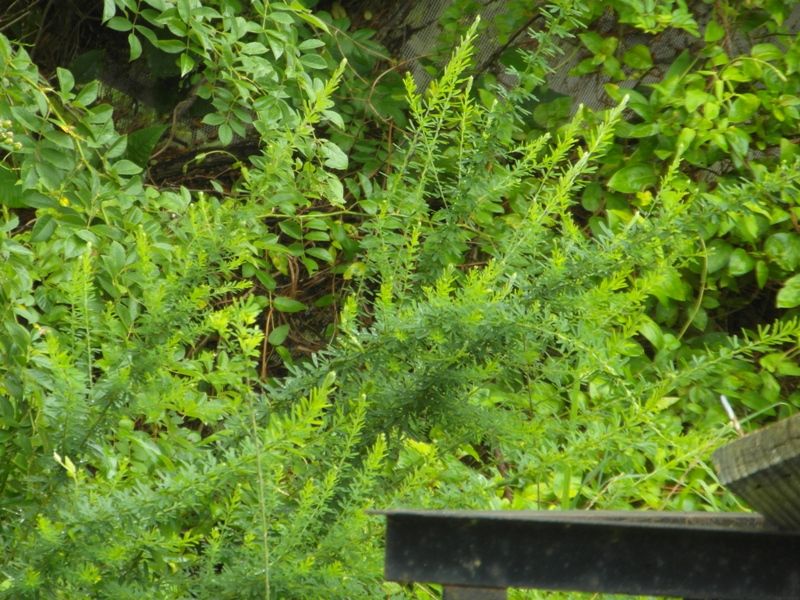
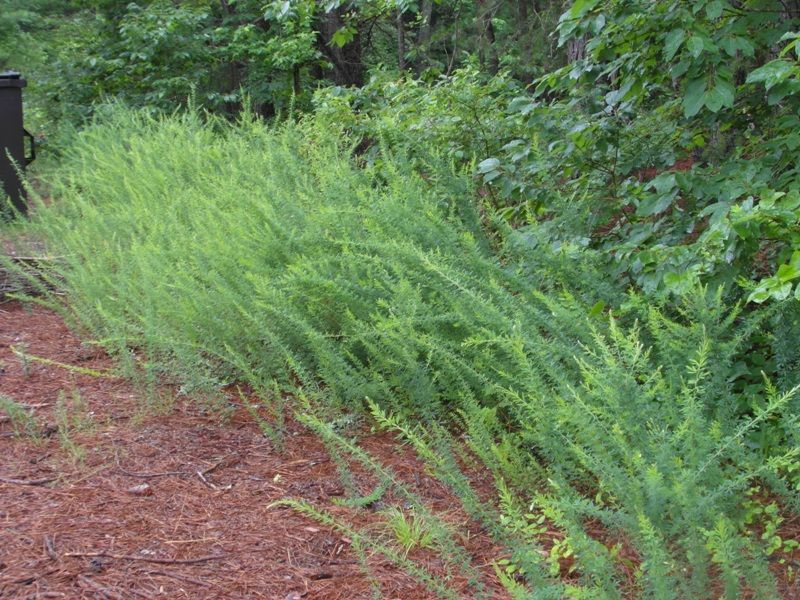
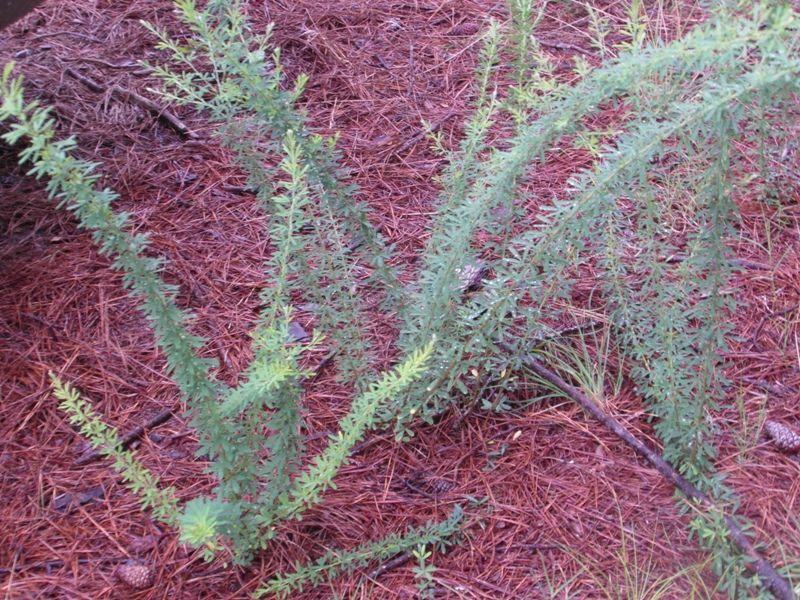
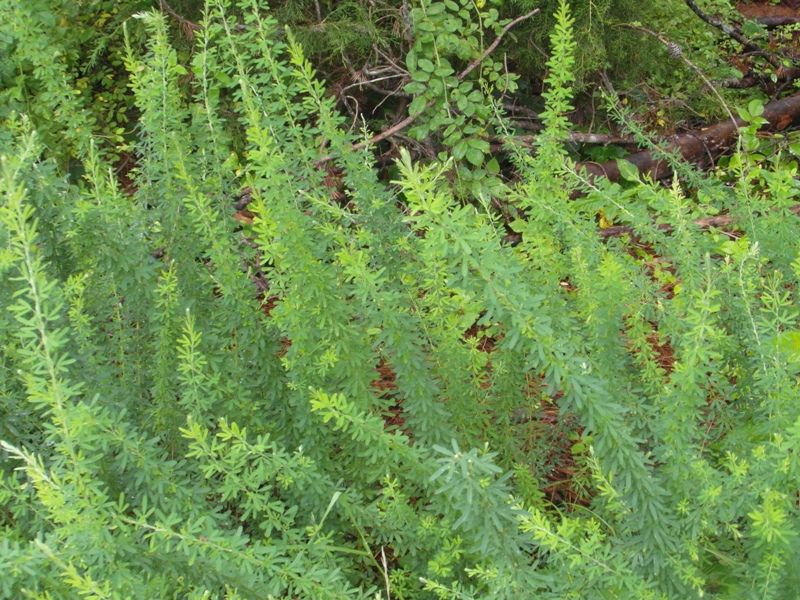
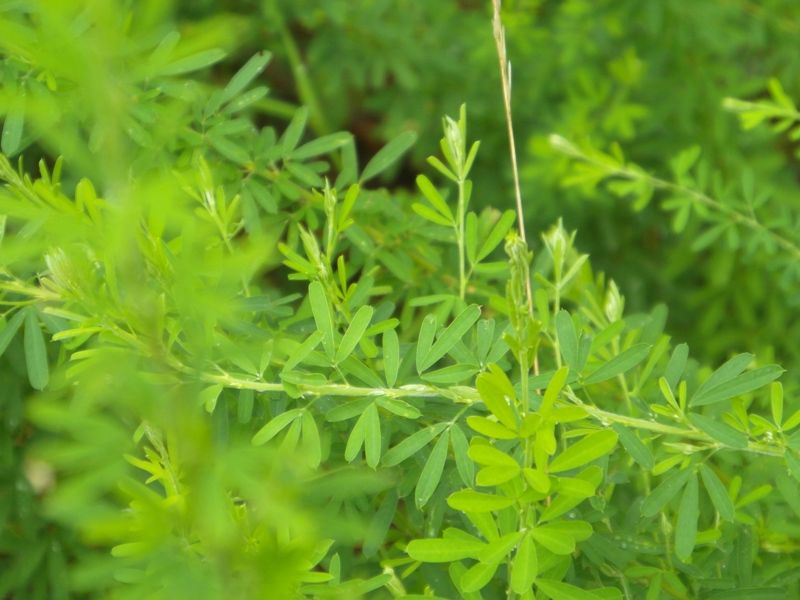
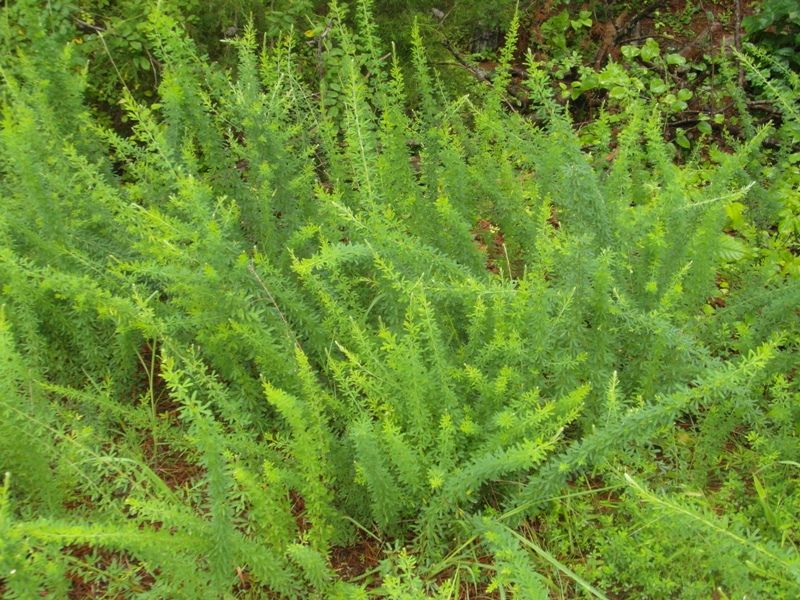
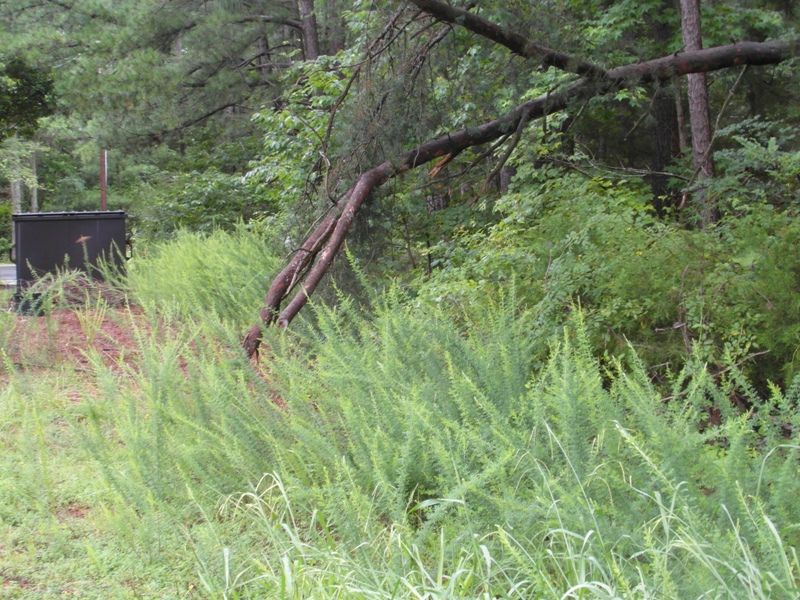
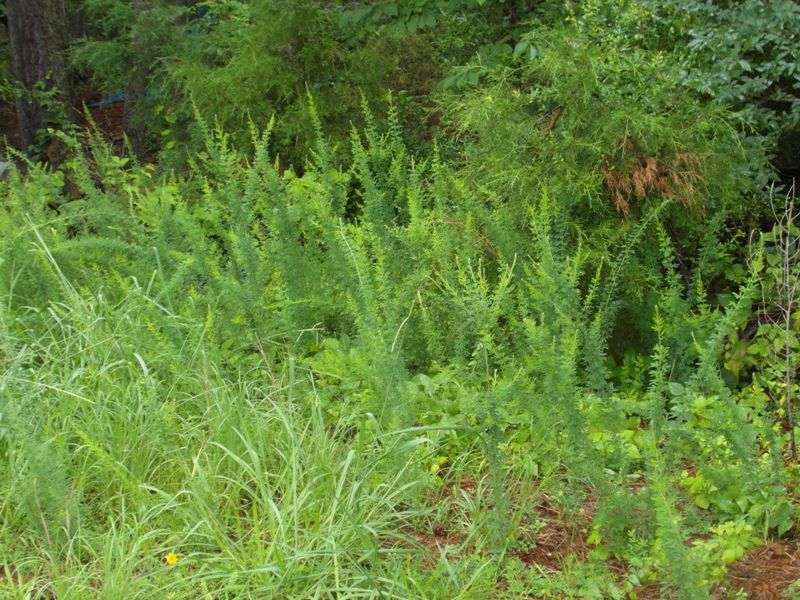
Since this in organic husbandry I thought you may be interested in Lespedeza. It grows wild here but is high in tannins and acts as more of a preventative with parasites. Lespedeza has been studied a good deal. When goats eat it the parasites (mostly the barberpole) are greatly affected. It provides a coating of sorts around the worm making it unable to feed and unable to reproduce... eventually the worms will die and cannot continue to make more! Pine bark and pine needles are excellent also. Pumpkin is great too.
Pics of some of it on the fringe of the dumpster driveway. Notice it is where the pines are, with lots of pine needles. It is also growing in with the poison ivy.