We can get some rabbit wire at Ace Hardware along with Tractor Supply, Lowe's & Home DePot, but we don't have heavy rabbits so the less expensive wire will work.
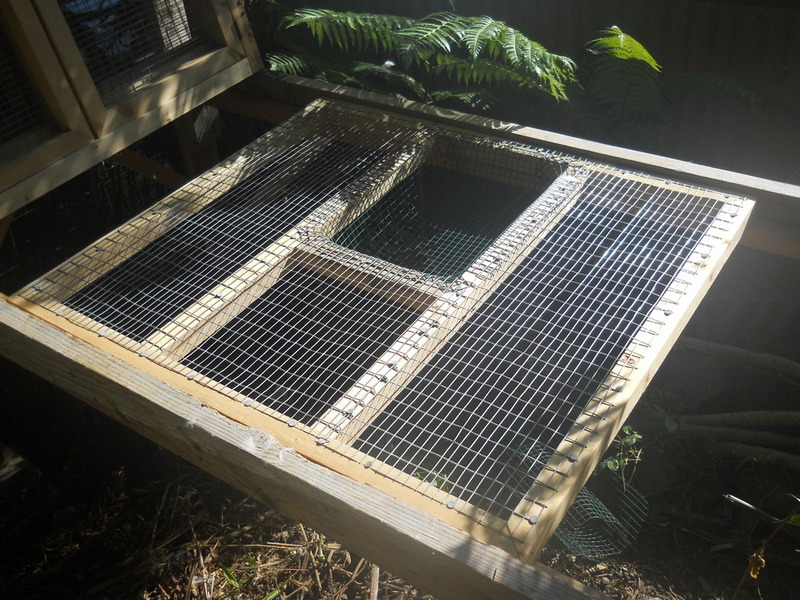
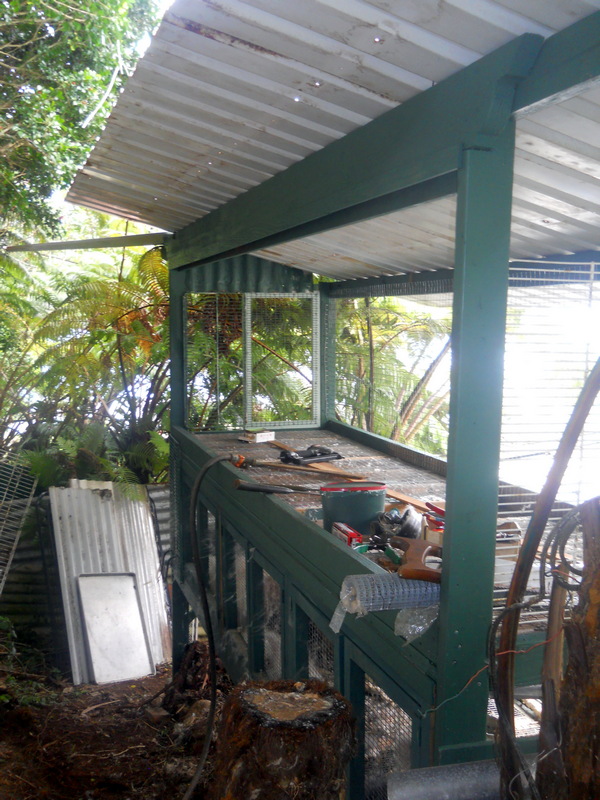
We build floor plates with wood cross members at about every foot and a half so the lighter wire won't sag. They have ledges and nest boxes to sit on if they don't want to sit on the wire.
The floor plates are also modular so when they rot out a new floor plate can be installed without changing the rest of the hutch.
Some of them are set up for a dropped nesting area, others of them are entirely flat
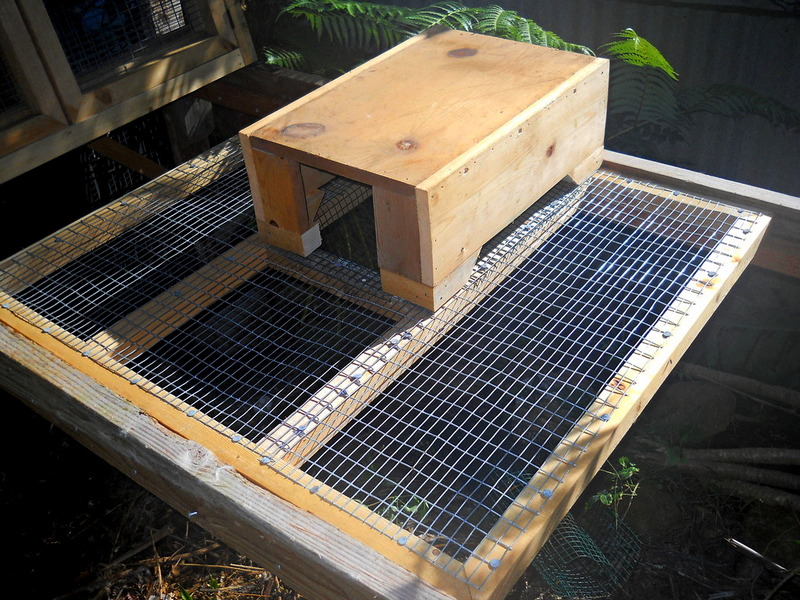
This one is for a dropped nest area. That means if a baby gets out of the nest, it can roll around and fall back in. A nesting box is set over the nest hole and there's slots along the bottom edge for babies to fall back in.
Also, I have some big ceramic tiles which will fit over the hole so if I need the floorplate as a flat floorplate, it can be used with the ceramic tile covering the hole.
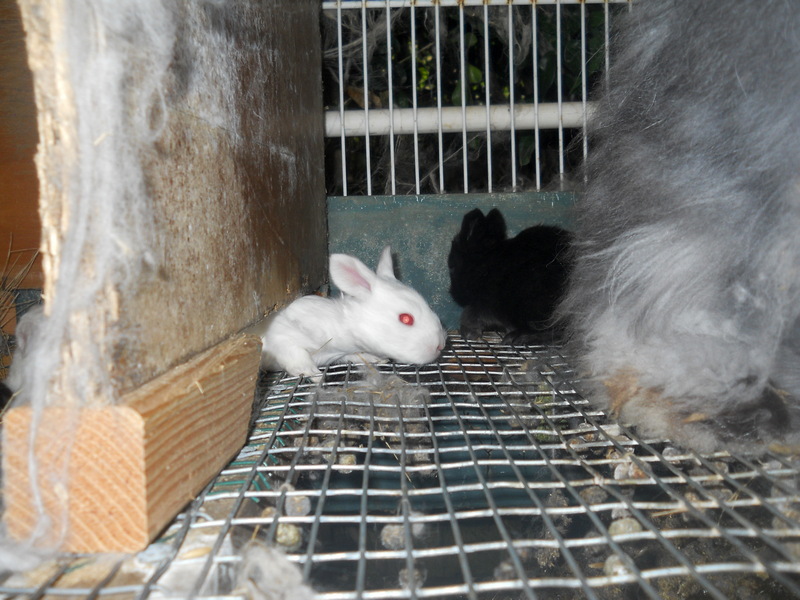
This is an older baby, they can still sneak under the edges until they're a few weeks old. We haven't had any babies out chilled on the wire since starting with the dropped nesting areas. The bottom of the nests are slightly sloped, so the babies all end up in a pile, that helps keep them warm, too. No chilled babies in the corner of a nest box.
The roof, sides and back remain in place, the floor plates and doors are all modular and can be easily removed and replaced if necessary. Makes for easy hutch cleaning when they can come apart.
There's also movable walls, so it can be one big space, three smaller spaces or two spaces, depending on the current needs of the herd.
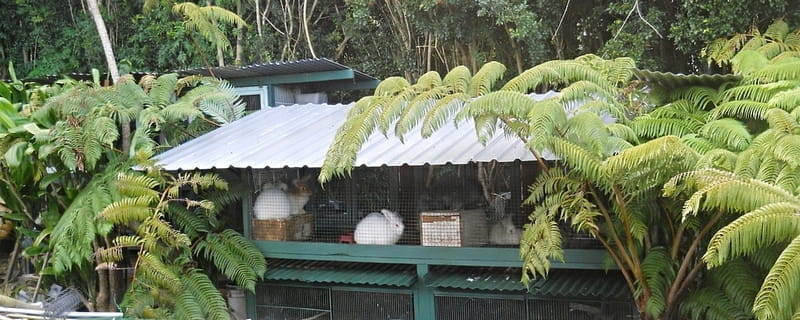
Those are angoras, so they're mostly fluff and not nearly as big as they look.
Due to somewhat limited space, the big hutches were built as two story hutches. Since then, I've found that a single layer is a lot easier to maintain since the roof of the lower area collects manure and needs to be cleaned off.